
This article contains affiliate links. If you buy through them, Raqs Atlas may earn a small commission at no extra cost to you.
A practice video is not a performance video. The performance version wants atmosphere and polish. The practice version has a simpler job: show you what your body actually did.
Did the weight change happen before the hip accent? Did the arm arrive late? Did your traveling pattern quietly drift out of its intended line? Was that shimmy really as even as it felt?
A mirror helps in the moment, but video lets you revisit a phrase without dancing it. A reliable filming corner can serve beginners and professionals alike. You do not need to record every rehearsal.
The encouraging news is that you probably already own the most expensive part: a smartphone. The rest is about stability, framing, light and making sensible choices before spending money.
1. Build the frame before buying the equipment
The first question is not "Which camera should I buy?" It is "What do I need to see?"
For a raqs sharqi combination, feet matter as much as hands. A camera cropped at the knees hides the transition into a turn; a camera too close cuts off expressive arms. Leave space above raised hands and in the direction of travel.
Start with the phone roughly between waist and chest height, then adjust for the room. This is a practical starting point, not a universal rule. A camera placed too low may exaggerate proportions; one placed too high can hide footwork. If you need to record a full choreography, perform its largest movement once before pressing record and check the edges of the image.
Use landscape orientation when studying traveling sequences across a wide floor. Portrait orientation may be better for a vertical Reel, but it is often less forgiving when the choreography moves sideways. Decide what the recording is for before deciding its shape.
Finally, keep the phone stable. A steady image is not simply prettier; it makes comparison between rehearsals easier because the frame is not changing with every step.
2. The first useful purchase: a full-height phone tripod
Marketplace example: Portable 160cm/200cm Selfie Tripod Stand, 160cm selfie tripod variant, $15.06, seller DFG Photo.

Pros: The listed 160cm height is potentially useful for standing full-body shots; a phone holder and remote are advertised in the product family; the stand can be repositioned between front and side views.
Cons: Lightweight selfie tripods can be less stable than heavier camera stands. Check the exact selected variant and included accessories before buying.
A tripod can change your routine: no more balancing a phone on books. Prioritize a secure clamp, stable base, suitable height and a head that tilts without loosening.
If you are ordering internationally, compare the final delivered price with a local photography shop. A $15 stand is not a $15 purchase when shipping costs another $20.45. For this listing, a local alternative may be better value.
3. Light the dancer, not the decorations
A window is an excellent place to start. Face toward the daylight or place it slightly to one side. Avoid positioning the brightest window directly behind you unless you deliberately want a silhouette. The goal is to see the torso, hips, arms and feet without deep shadows swallowing the movement.
When natural light is unavailable, a modest fill light can help, but more brightness is not automatically better. Hard frontal light may flatten the body, while a tiny light positioned far away may have little effect on a full-body shot.
Marketplace example: 26cm / 10-inch USB LED Ring Light with Tripod, Style 1 variant, $17.45, seller ONETOMAX Global Store.
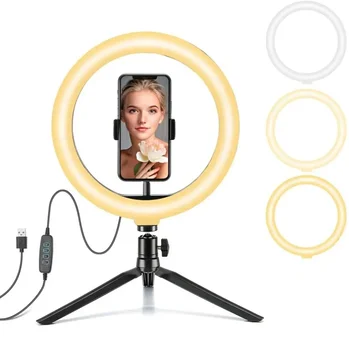
Pros: Adjustable light can be useful for talking-to-camera introductions, close-up technique explanations and low-light rooms; USB power may suit a compact workspace.
Cons: A ten-inch ring is not a substitute for lighting an entire stage or a large room. The variant label does not independently verify the stand height, and a ring light may create reflections in mirrors.
For full-body dance, position any light where it illuminates the whole working area rather than only your face. A lamp you already own, diffused safely and placed outside the movement path, may be enough. Keep power cables away from turns and traveling steps.
4. A remote is convenient - but check whether you already have one
Walking back to the phone between takes can interrupt concentration. A simple remote can make it easier to start a recording, return to your mark and begin again. Compatibility matters, however: some remotes operate the camera shutter in photo mode but do not control video recording in every phone app.
Marketplace example: Bluetooth Remote for iPhone and Android Phones, Black variant, $5.45, seller Factory Collected Store.
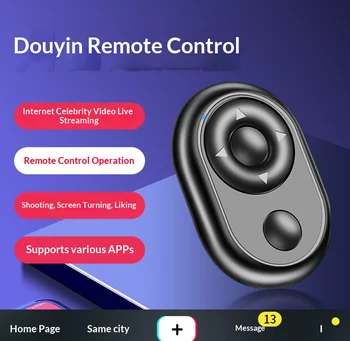
Pros: Small and inexpensive; potentially useful for solo practice and self-taping.
Cons: App-specific video control is not verified here; the tripod listing above already advertises a remote, so purchasing both may be redundant.
Before ordering, try your phone's built-in timer or a recording app you already use. If your tripod comes with a compatible remote, spend the saved money on something more useful.
5. Audio depends on whether you are dancing or teaching
For a personal choreography check, perfect audio is not essential. You mainly need to identify the phrase you were dancing to and hear its relationship to your movement. For a spoken tutorial, however, intelligible speech matters. This is where a small microphone can be worthwhile.
Marketplace example: 1.5m Wired Clip-on Lavalier Microphone, Type C variant, $5.39, seller Stone's Store.

Pros: Low entry price; a clip-on format can help keep speech pickup close to the speaker; several connector variants are listed.
Cons: A 1.5m cable restricts movement and can become a tripping hazard. USB-C compatibility depends on the phone and app. This is not a tested recommendation for recording loud live music.
If you are filming a dance demonstration, keep a wired microphone out of the movement area or record your spoken explanation separately. Never attach a cable that could catch on a costume or wrap around your legs while turning. For music-led rehearsal, the phone's built-in microphone may be entirely adequate.
6. A tiny fill light is optional, not a full-body solution
Marketplace example: Portable Rechargeable Mini Clip-on Fill Light, White variant, $7.87, seller Shenzhen Jiamo Optoelectronic Technology Store.
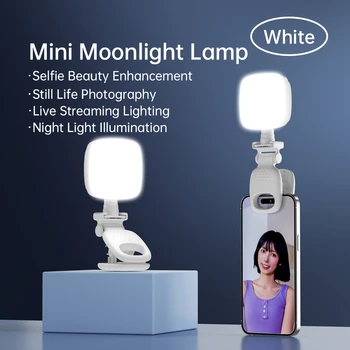
Pros: Compact for a travel bag; potentially useful for close-up handwork, costume details or a short introduction.
Cons: A small clip light is unlikely to illuminate a full-body dance space evenly. Battery runtime and brightness were not independently tested.
This is the sort of product to buy only after you know what problem you are solving. If your practice room is already bright, skip it. If you film detailed tutorials at a desk or close to the camera, it may earn its place.

7. The best upgrade is a repeatable filming routine
Equipment does not improve technique by itself. A short, repeatable review process is what makes the footage useful.
Record one complete take
Avoid stopping every time something feels imperfect. A full run reveals stamina, transitions and the places where attention drifts. It also helps you distinguish a one-off mistake from a recurring habit.
Review one question at a time
On the first viewing, watch the feet and weight changes. On the second, watch upper-body timing. On the third, listen to the music and ask whether the movement acknowledges phrasing rather than merely following counts. This is more manageable than trying to correct every detail at once.
Keep the camera position consistent
Mark the tripod and starting positions for easier comparisons. Use removable, floor-safe tape and keep markers away from turns.
Save a private version before making a public one
A rehearsal recording is not automatically social-media content. If other dancers appear, obtain their agreement before sharing. Check the background for private information. If you upload a video with commercial music, remember that a platform may identify copyrighted audio even when the video was recorded during your own practice. YouTube explains that Content ID can lead to tracking, monetization by a rights holder or blocking.
8. What should the budget actually be?
For the selected examples, the tripod ($15.06) and ring light ($17.45) total $32.15 + shipping before possible checkout changes. Add the USB-C lavalier ($5.39, $0 observed shipping) only if you need to record spoken instruction: the combined observed amount becomes $37.9. A separate remote ($5.45) or mini fill light ($7.87) is optional, not essential.
That is not a universal worldwide price, and it is not a promise of final checkout cost. VAT, shipping rules, seller offers and variant selection can change the total. In some places, buying one sturdy local tripod and using window light will be both cheaper and better than ordering a collection of accessories.
The most useful setup is not the one with the most boxes arriving in the mail. It is the one you can prepare in two minutes, use safely and review without frustration.
When you watch your next practice clip, look for the moment where your body and the music genuinely meet. A good camera will not create that moment. It will help you recognize it - and return to it deliberately.
Editorial record
- Author
- Raqs Atlas team
- Editor
- Milica Lestaric
- Published
- 26 October 2026
Editorially Reviewed — Checked by our editorial team against available sources.
Found an error? Request a correction — see our editorial policy.